Web Design
Nov 15, 2025
Do I actually need a custom-built website?
Plenty of people reading this don't need a custom-built website. Here's how to honestly tell which camp you're in before you spend on either.

Where a template stops being the safe choice.
Here's something a website studio probably shouldn't admit. Plenty of the people reading this don't need what I sell. A personal trainer setting up on her own needs class times, a booking link, and a phone number. She picks a template, drops her logo in, and it works.
The problem shows up for a different kind of business: the ones whose website has to do actual work. Research from Stanford's Web Credibility Project found that roughly three out of four people judge a business's credibility from its website's design alone, often before reading a single word.
Most templates look fine on their own. The failure mode is quieter than ugly: they're built to be generic, neutral enough to fit almost any business without much friction. A template can't be built around how your specific business actually wins customers. Swap the logo and colours, and you've decorated someone else's decisions.
“A template proves you exist. A custom site has to prove you're the right choice.”
A custom build starts from your business, not a layout: what people need to see in the first three seconds, the one action you want them to take, which pages do the selling. That doesn't mean custom is always the right call. If your business changes fast or sells one simple thing, a template's flexibility can outweigh what you'd gain from something built around you.
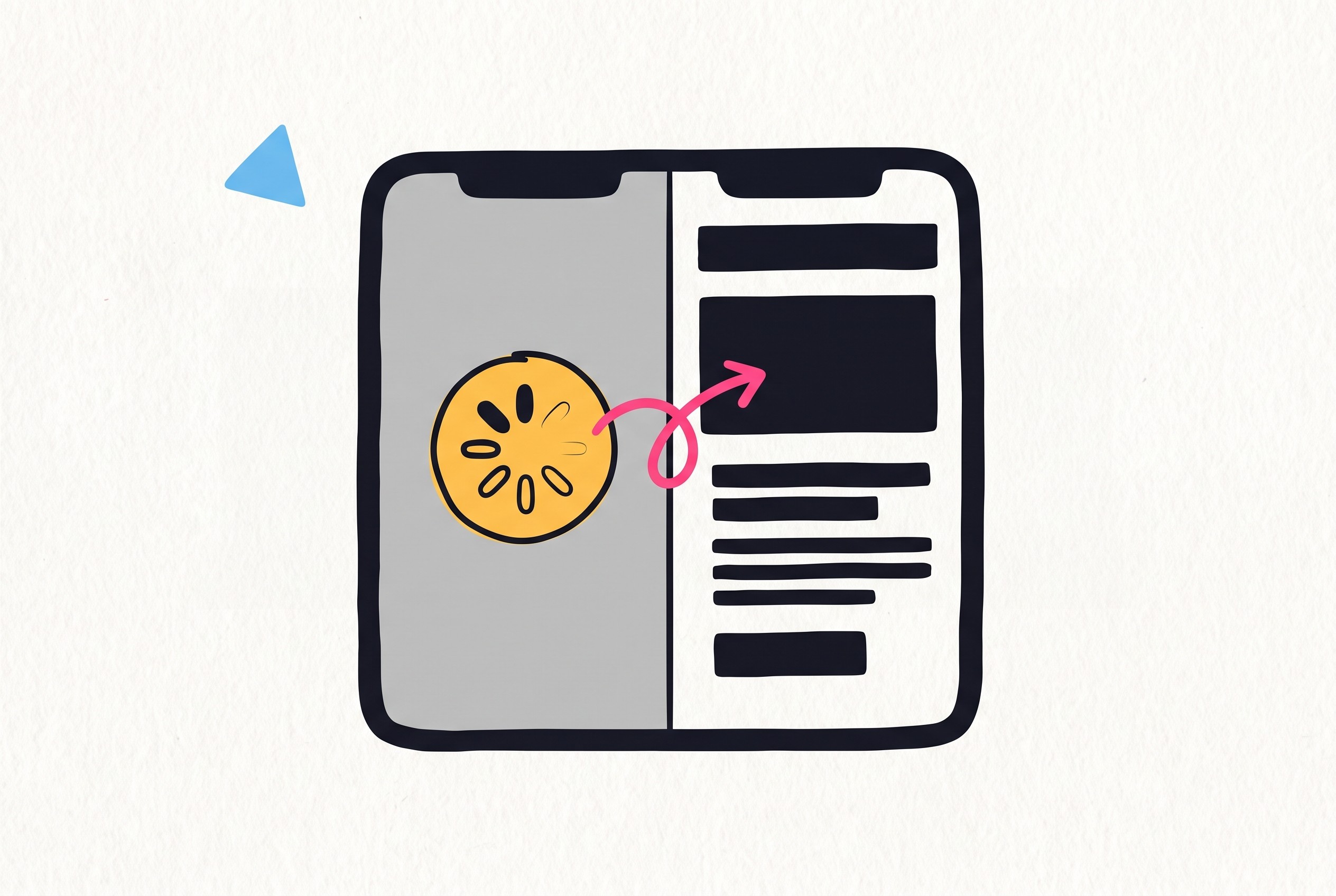
Speed is where this stops being a matter of taste. Google's research on mobile page speed found that 53 percent of visits are abandoned when a page takes longer than three seconds to load. A heavy template, stacked with sections and scripts you're not using, can hit that number before a visitor has registered your logo. A custom build is built page by page, with only what that page needs, which is the main reason bespoke sites tend to load faster.
Working out which one you actually need.
You can work this out yourself by answering one honest question: what is this website actually for. If the answer is "to exist," a template is the right tool. If the answer involves enquiries, bookings, or sales, look at what a template is actually costing you: the hours spent fighting a theme, your bounce rate, how the site loads on your own phone.
This comes down to being honest about which business you're actually running this year, not the one you hope to be running in three. A template that fits your business right now beats a custom site you can't yet justify, and a custom site built around how you actually get customers beats a template you've quietly outgrown.
If you've worked through that and landed on custom, starting your project is the easy part from here.